
Student of the Week - Jennifer Pierce
We are proud to announce Jennifer Pierce as this week’s Student of the Week!
“When I met Stephen and found out about Ridley Academy, I was at probably the lowest point in my life. I had fled a terrible marriage as a domestic abuse survivor and found myself in bed for about 4 years due to a car accident I was in. On top of that, I had found out I have a disease that causes hearing loss, and eventually I would be permanently deaf. But despite all of that, my love of music just couldn’t die. “I was hopeless and looking for something—anything. I came across an ad on Facebook about Ridley Academy. Stephen said, ‘Have you ever wanted to learn how to play the piano?’ I was like, ‘YES!’ So I signed up to join his webinar.“I had felt for a long time that my life was over — every day in bed and in pain. But I didn’t want that to be my life anymore… So, I watched the clock count down second by second — until Boom! I was there on the webinar with Stephen and all his positivity. All his pizazz. All...
Student of the Week - Jana Wae
We are pleased to announce Jana Wae as this week’s Student of the Week!
“When I saw Stephen jump onto a piano stool in an Instagram ad that appeared on my screen, something inside me was triggered. I immediately wanted more of the inspiration that his playful, positive energy gave me. From that moment on, a journey of inspiration began — one that has had a very positive impact on my life.“The piano had fascinated me ever since I was a child, and even after the piano lessons I took back then, the instrument always gave me so much personally. It was something that connected with me on a deeper level.“So, at some point during the pandemic, I decided I wanted to give Ridley Academy a try because being able to play the piano freely and creatively had always been a very deep, yet seemingly distant, dream of mine. “Ridley Academy gave me back a hope that I thought I had lost. It has helped me grow personally and has greatly refined my playing. I have become more courageous, more expressive,...
Student of the Week - Tyler Cantos
We are very proud to announce Tyler Cantos as this week’s Student of the Week!
“When I first found Ridley Academy, I’d been playing piano for around 20 years, but I’d never taken lessons. I only learned through watching YouTube videos and always wanted to really learn from the beginning. I attended one of the live calls Stephen did and decided to just take the plunge.
“I knew some of the basics, like chords, before enrolling. — but I didn’t know how to practice with them. The biggest thing that has helped me grow from Ridley Academy has been learning how to practice. The Ridley Method has helped me increase my speed, improve my finger dexterity, and learn music quicker.
“My confidence has improved from posting videos within the Ridley Academy community. Getting feedback on my posts has helped me improve and build confidence playing in front of others.
“I am particularly proud of how much my speed with learning songs has improved. I used to try to speed through learning songs, and it woul...
Student of the Week - Ellen Nasser
We are excited to announce that Ellen Nasser is this week’s Student of the Week!
“I enrolled in Ridley Academy because I wanted to take my music to the next level and wanted to combine it with what I had learned studying at the Royal Conservatory of Music.
“My musical journey has definitely gained momentum since having the courage to create and post online through Ridley Academy. If I had waited until I was ‘good enough ’-the day would’ve never come.
“My confidence has definitely improved —especially from watching Stephen have such passion for what he does, and his ability to share it’s so graciously with the world.
“I’m definitely calmer and more relaxed around the piano now. It feels like the more I play, the more I want to play. And the more I play, the better I get and the more comfortable I feel. Ridley Academy has brought me to a place of exploration, creation, and healing.
“The staff at the academy have been incredibly encouraging and totally hands-on with any questions or concerns...
Student of the Week - Ashley Akey
We are very pleased to announce that Ashley Akey is this week’s Student of the Week!
“Ridley Academy has become such an important part of my musical journey.
“I’d wanted to play piano since I was about four years old. I would make up words and songs and sing them all over the house, and I wanted to be able to sit at a piano, play the music I heard in my head, and turn those words into actual songs
“Music stayed with me as I grew up. I learned other instruments, sang, performed, and created in different ways. More than anything, music became a way for me to connect with other people and better understand myself. When I couldn’t always find the right words to express how I felt, somehow I could find them through music.
“Life eventually took me in a very different direction. I joined the Marine Corps at 17 and served for more than 11 years before being medically retired in 2023. The Marines had been such a huge part of my adult life that when it ended, I felt like I had lost much more tha...
Student of the Week - Suzy Devey
We are very excited to announce Suzy Devey as this week’s Student of the Week!
“Here are some reflections for you! I decided to enroll with Ridley Academy to give myself the gift of music. I had heard some of Stephen’s songs, which I found incredibly emotionally connecting. This led me to a webinar with him, and I realized enrolling would be such a gift— to be able to play for other people without thinking too much and truly be myself on the piano. I wanted to really share something honest and expressive, and I wished to understand music on a deeper level, too.
"Personally, I truly wanted to overcome some barriers in my self-confidence — specifically with performing — and to get the belief that music was not only for the ones who had studied it inside and out. There are many barriers I overcame as a beginner, and now every time I go to sit at a piano, I have so much love for it. To me, I think that’s a sign of remarkable teaching— that during the steps of learning you can really become...
Student of the Week - Anna Fafara
We are very pleased to announce Anna Fafara as this week’s Student of the Week!
“In 2022, I decided to return to a childhood dream I had almost completely forgotten: learning to play the piano. This turned out to be the best decision I have made in my whole life…
“I had no formal musical background, although music had always been present in my life. For two years, I had volunteered alongside various artists, attending sound checks, supporting their teams, helping with packing and unpacking equipment, making sure everyone had what they needed, and documenting their work through video. I was always surrounded by music and musicians, but never imagined that one day I would have the confidence to sit at a piano and play for other people.
“I couldn’t read sheet music, I didn’t know any chords, and I honestly had no idea where to begin. One day, I simply went online and searched for ‘learn to play piano online.’ I clicked on the first link - Ridley Academy - and that was how my journey began...
Student of the Week - Wan Choong
We are very pleased to announce that Wan Choong is this week’s Student of the Week!
“I had formal piano lessons when I was in school. Then, in adulthood, work, family, and early parenthood made me almost forget about the piano. During the lockdown, I was looking for a piano teacher online for my kids. One day, Stephen’s presentation dropped in my social media feed. Impressed by his story and passion for teaching piano, I enrolled in Ridley Academy: 1. To inspire my kids and 2. To learn myself. At first, it took a little bit to get me going, but luckily Ridley Academy is an evolving entity. The contents get updated. There is a Facebook Community. And I get email reminders to get back on course when I need them! After completing the Masterclass, I signed up for the Ridley Academy Mentorship program, and that was the best decision I have made for my musical journey. My coach is amazing! My musical journey has moved from playing piano for just myself to playing for my kids, to playing for...
Ridley Academy Wins Global Recognition Award!
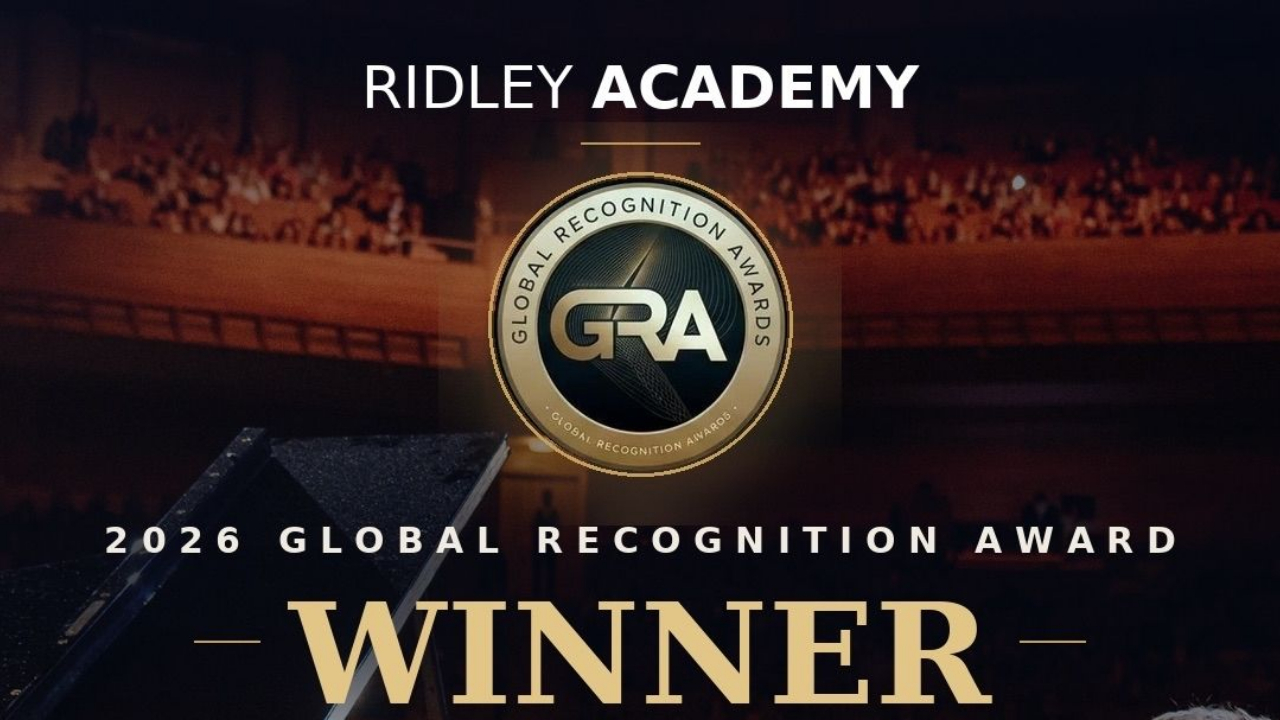
Proud to announce the ‘little piano project’ - Ridley Academy - I started 7 years ago, teaching adults how to play piano, just got a Global Recognition Award!!!
40,000 students. 70 countries. It’s an amazing team working together as a real group that has made this happen.
I’m so proud of everybody involved.
I wanted to copy and paste what they wrote below.
Our independent judging panel has awarded you the Global Recognition Award for exceptional achievement.
The selection process is highly competitive. Of the 15,000 entrants each year, Ridley Academy has been recognized with the 2026 Global Recognition Award, and the honor reflects a body of work that has changed how tens of thousands of people around the world approach the piano. Its founder, Stephen Ridley, built a curriculum around emotional expression rather than dense theory, and that decision has produced measurable results across a genuinely global student base. The award falls under the Innovation category, since the academy's t...
Student of the Week - John Hughes
Ridley Academy is excited to announce John Hughes as our Student of the Week!
“I decided to enroll in Ridley Academy because I had a very clear goal to develop a professional piano sound and personal style. I wanted to learn advanced chords, jazz accompaniment techniques, techniques for overcoming challenges. I also wanted to develop more fluent and common use of polytonality in my improvisational melodies and to become more proficient at reading music and more confident in my playing.
”With all those previously-seeming unreachable goals in mind, my musical journey with Ridley Academy has been very rewarding. I was able to learn a bucket-list piece. My style and sound feel more complete. My confidence and playing have improved tremendously. I no longer get nervous to play for other people and rarely get nervous when hitting record. I use much richer chords and have more control over dynamics.
”I intentionally found a way to break any ‘musical rule’ from rejecting that music requires rep...
